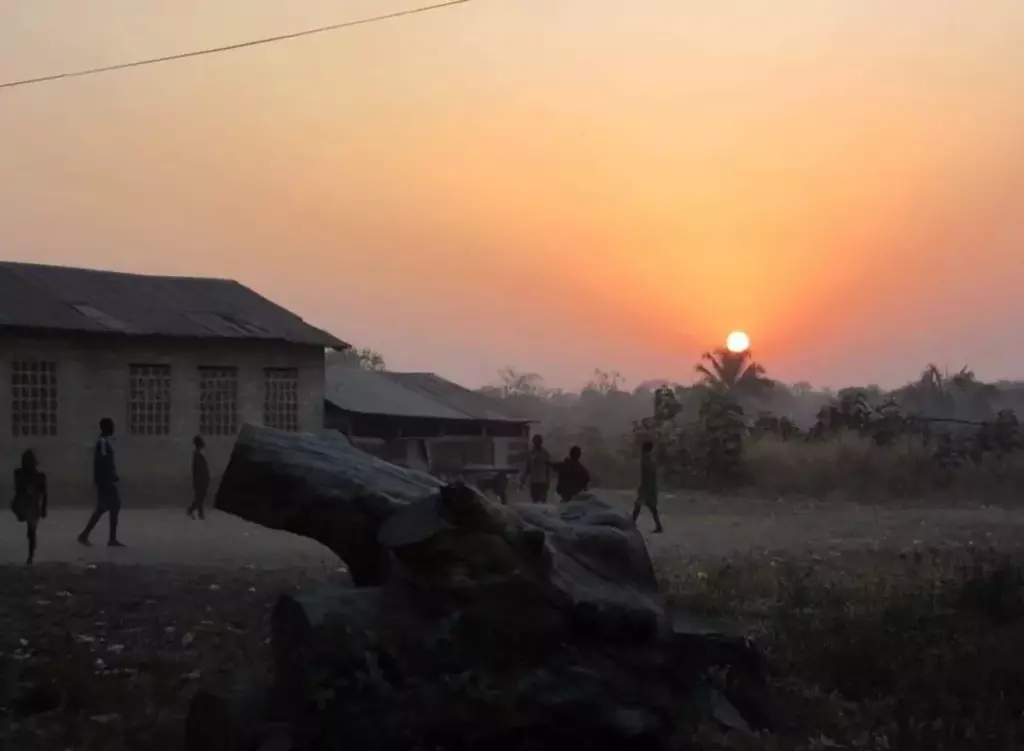
In the magical kingdom of Kazaboua, Togo, where I served in the Peace Corps for two years, lived a woman named Wazaria. She would show me by her sheer existence the kind of person I want to be in the world.

Wazaria, or Waz, as she’s popularly known, owned the biggest boutique and hair salon in Kazaboua, a small village inhabited by the proud Kabiye people and named after its famous river of crocodiles (although the crocodiles are unfortunately now extinct).

Everyone in the village and beyond seemed to be magnetically drawn to Waz. It didn’t take me long to understand why. After I was introduced to her, everyday when she would see me walking home from the local clinic, Waz would meet me halfway in order to complete the walk with me. She would always crack a joke or another and later tell me this was intentional because she knew that humor made the heart feel at ease when one was far from home.

Not too long after walking me home, she would go home to cook for her family and, as I would later find out, also for me. Every evening, Waz would bring over my serving along with hers so that I could have someone to share a meal with. Every. Single. Evening. And every time before we ate, Waz would wash her hands, then wash mine with her clean ones, almost like you would with a little child. Sometimes when my porch was unkempt, I would wake up to a sparkly clean one because Waz had thought that I may have been too busy to get around to it and wanted to ease my burden.
The unbelievable thing about all of this was that Waz was like this to everyone – simply having others’ best interests at heart, being radically humble, and always offering kindness. It would make sense if I said Waz had never faced any obstacles in her life; perhaps her overwhelming and unconditional kindness had been born of. an easy, breezy, joyful life.
But Waz had lost her father at a young age and her mother had fled to Niger soon after in search for greener pastures, leaving Waz to fend for herself with extended family members. Not long after, Waz dropped out of high school after getting pregnant to raise her incredible daughter, Leticia, with her husband and two beautiful boys that have since come into the world. Yet – there she was, standing to offer nothing but kindness to me, a young Nigerian American woman, whom she met for no more than a few seconds before she treated me like family.
To this day, I do not fully comprehend all of what Waz represents in my life. But the experience of knowing Waz set a new paradigm for who and how I want to be in the world.
__
“The Kindness of Strangers in Foreign Lands” is an ongoing collection of stories by Temidire Alesh, honoring the generosity and warmth of people she’s been lucky to encounter during her travels across the world. Each story is a small act of remembrance—a gratitude practice, rooted in the quiet truth that kindness lives everywhere, and strangers are often just friends we haven’t met yet.